
The concerns over witness intimidation and bullying targeting Bill C-11’s critics continues to attract attention on Parliament Hill as Senators spent more than an hour debating the issue earlier this week. The issue stems from a Globe and Mail report that Canadian Heritage Parliamentary Secretary Chris Bittle – together with his colleague, Liberal MP Lisa Hepfner – sent a letter to the Lobbying Commissioner to seek an investigation into the funding of Digital First Canada, a group representing digital first creators. DFC’s Executive Director, Scott Benzie, appeared before the Heritage committee in the spring and Bittle used his time to focus on the organization’s funding. The Lobbyist Commissioner letter was apparently filed more than two months ago and Benzie had been assured that he was compliant with the law. The story was presumably leaked to coincide with Benzie’s appearance before the Senate committee, a tactic that smacked of witness intimidation and bullying with the government seeking to undermine a critic of the legislation. Soon after, Conservative MP John Nater filed a point of privilege in the House of Commons, arguing that Bittle had attempted to intimidate a Senate witness and the matter escalated further at the Senate committee, where multiple Senators raised the issue.
Post Tagged with: "canadian heritage"

The Law Bytes Podcast, Episode 141: Why the Online News Act is a Bad Solution to a Real Problem, Part Five – My Appearance Before the Standing Committee on Canadian Heritage
The Standing Committee on Canadian Heritage launched its hearings on the Online News Act (Bill C-18) with a pair of hearings late last month. At this stage, it remains unclear whether the committee will undertake the extensive study the bill deserves. I appeared in the very first hearing, using my opening statement to touch on four key concerns: the definition of “use”, government intervention, the risk of increased misinformation, and the breaches of Canada’s trade and treaty obligations. Coinciding with National Newspaper Week, this week’s Law Bytes podcast features an introduction to the bill and audio clips from the appearance.

Bill C-11 Goes Off The Rails Amid Charges of Witness Intimidation and Bullying by Government MPs
The Senate Bill C-11 hearings have provided a model for the much-needed, engaged, non-partisan inquiry that was largely missing from the House committee’s theatrics in which the government cut off debate on over 150 amendments. But this week those hearings attracted attention for another reason: serious charges of witness intimidation and bullying by government MPs, most notably Canadian Heritage Parliamentary Secretary Chris Bittle (yes, the same Bittle who last month suggested I was a racist and a bully for raising concerns about Minister Pablo Rodriguez silence over Canadian Heritage funding of an anti-semite as part of its anti-hate program).
The Globe and Mail reported late on Tuesday night that Bittle – together with his colleague, Liberal MP Lisa Hepfner – had sent a letter to the Lobbying Commissioner to seek an investigation into the funding of Digital First Canada, a group representing digital first creators. The letter may have been shopped around to other MPs as Liberal MP Anthony Housefather has told the Globe he did not sign it. DFC’s Executive Director, Scott Benzie, had appeared before the Heritage committee months ago and Bittle used his time to focus on the organization’s funding. Leaving aside the fact that government MPs reserve these kinds of questions only for critics of Bill C-11 (there were no similar questions this week from Ms. Hepfner to the Director of Digital Content Next, whose organization supports Bill C-18 and counts Fox News among its members), the timing of Globe story was incredibly troubling. The Lobbyist Commissioner letter was apparently filed nearly two months ago and Benzie had been assured that he was compliant with the law. Yet the story was presumably leaked to coincide with Benzie’s appearance before the Senate committee last night.
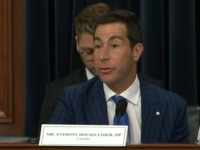
The Law Bytes Podcast, Episode 140: Anthony Housefather Reflects on the Fight Against Anti-Semitism Online and the Laith Marouf Incident
The Law Bytes podcast returns with a special episode focused on combatting online anti-semitism with a particular emphasis on an incident involving the department of Canadian Heritage and Laith Marouf, a well known anti-semite. As part of Heritage’s anti-hate program, the government had provided funding to the Community Media Advocacy Centre (CMAC), led by Marouf, to develop an anti-racism strategy for Canadian broadcasting. While there was years of evidence of Marouf’s anti-semitism, the department didn’t look or didn’t find it. The contract was cancelled after a public outcry, but even that led to concerns as it was left to Jewish MPs such as Anthony Housefather, Ya’ara Saks, and Melissa Lantsman to say something while many others remained silent.
Anthony Housefather, a Liberal MP from Montreal, not only spoke out on the Marouf situation but also called on all MPs to become more vocal. Housefather has been working on the online anti-semitism issue with politicians from around the world as part of an Inter-Parliamentary Task Force on Online Antisemitism and he joins me on the Law Bytes podcast to talk about the work of the task force and its recent hearing in Washington, DC, the Marouf incident, and the urgency for all to speak out more aggressively against anti-semitism.

Why the Online News Act is a Bad Solution to a Real Problem, Part Four: Undermining Canadian Copyright Law and International Copyright Treaty Obligations
The series on why Bill C-18, the Online News Act, is a bad solution in search of a real problem has thus far focused on three issues: the risk to the free flow of information stemming from mandatory compensation for linking, how the bill encourages clickbait and other low quality news given the absence of standards in the definition of “news content”, and the unprecedented government intervention in a sector where independence is essential. Today’s post raises an unlikely issue given that Bill C-18 is the responsibility of Canadian Heritage Minister Pablo Rodriguez, who also has part responsibility for copyright law in Canada. Buried within the bill is Section 24, a short provision with big copyright implications:
For greater certainty, limitations and exceptions to copyright under the Copyright Act do not limit the scope of the bargaining process.
What does this mean and why is it in the bill?

Recent Posts
 Still Not a Privacy Law: Bill C-25’s Political Party Privacy Provisions Fall Short Again
  Could Bill C-22 Make Canadians Less Safe? The Systemic Vulnerability Gap in Canada’s New Surveillance Law
  Why the Verdict on Social Media Defective Design Harming Children Gets the Instinct Right But the Law Wrong
  Scoping in the Tech Giants: Bill C-22’s International Production Order and the Shift to a Less Privacy-Protective Cross-Border Disclosure System
  The Law Bytes Podcast, Episode 263: The Lawful Access Act Roundtable With David Fraser and Robert Diab
