
Canadian Heritage Minister Pablo Rodriguez’s credibility took another hit yesterday with an exceptionally misleading tweet on Bill C-11. The tweet featured a video of artists encouraging Canadians to seek out Canadian content, which Rodriguez used to tweet “I’m hearing so many stories from artists about how Bill #C11 will make a real difference for artists. This is what it’s all about: supporting diverse Canadian culture, artists, and stories.” Leaving aside the fact that thousands of digital creators have vocally opposed the bill with warnings that it will result in serious harm to their careers and livelihood, the artists in the video were not speaking about Bill C-11. We know that because the video was launched in April 2021, pre-dating Bill C-11 by nearly a year and created before the government started the ruckus by removing Section 4.1 protections for user content from Bill C-10.
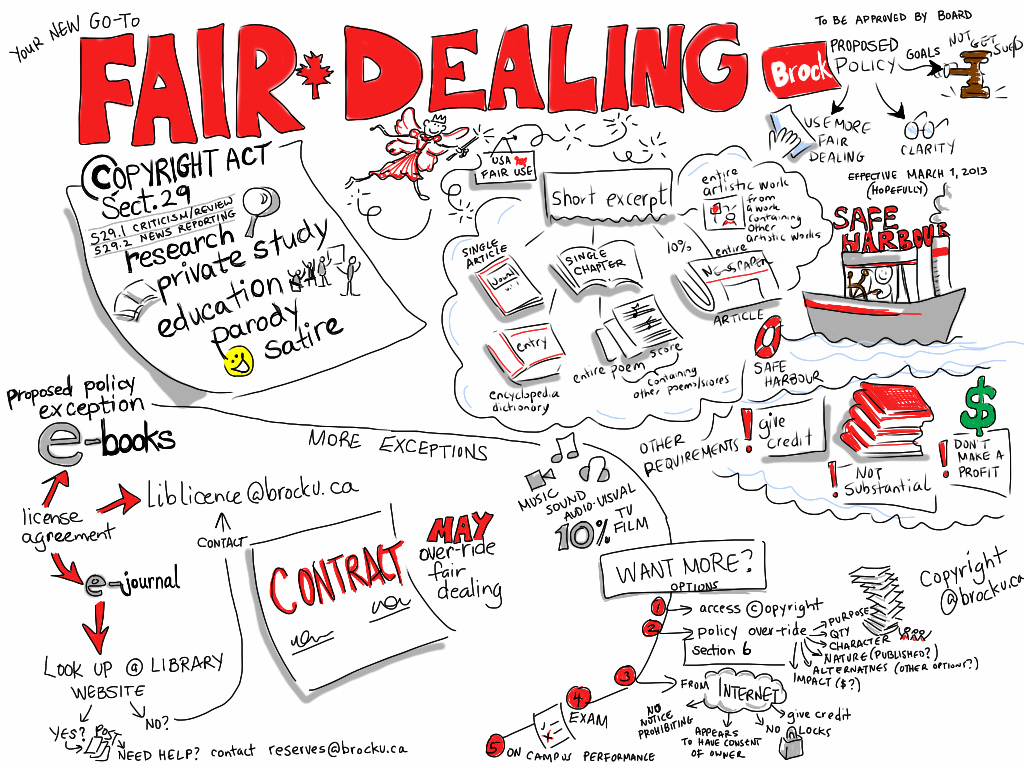
Fair Dealing by Giulia Forsythe (CC BY-NC-SA 2.0) https://flic.kr/p/dRkXwP
Copyright

Small Business Weak: Why Bills C-11 and C-18 Undermine the Government’s Claims of Small Business Support
As anyone watching the House of Commons this week knows, it is Small Business Week. Each day, Liberal MPs have stood in the House to proclaim their support for small business. The speeches are supplemented by tweets, such as this one by Canadian Heritage Minister Pablo Rodriguez. The professed admiration for small business came to mind last night during a spectacular Senate hearing on Bill C-11 featuring Jennifer Valentyne, Stewart Reynolds (aka Brittlestar), and Darcy Michael. The three witnesses, who were bursting with energy and confidence, came with simple message: fix Bill C-11 by keeping the government and CRTC away from the platform algorithms. It is a message that Rodriguez has ignored for months, despite the fact that these are precisely the creators one would think the Minister of Canadian Heritage would want to support.

Why the Canadian Film and TV Production Sector’s Bill C-11 Expectations Are Wildly Out of Touch With Global Standards
Last week, the ongoing Senate hearings into Bill C-11 featured an appearance from the Canadian Association of Film Distributors and Exporters, who spelled out its expectations for Bill C-11, particularly the contributions from streaming services such as Netflix, Disney+, and Amazon Prime. While much of the Bill C-11 debate has focused on the regulation of user content, the bill’s supposed intent is to bring large streaming services into the Canadian broadcasting system. Fuelled by the government’s dubious claim that the bill could generated a billion dollars per year (even government officials now admit that the number is an estimate based not based on actual data), the Canadian sector came sporting demands wildly out of touch with international standards. Indeed, when compared to European regulation, which is often touted as the global leader, Canada would strongly discourage market entry for streaming services and likely result in reduced libraries of content in order to meet the government and CRTC’s regulatory requirements.

The House of Commons Committee Process is Broken
Over the past year, I have watched an unhealthy amount of House of Commons and Senate committee hearings. In fact, in recent months I may have watched more of the Standing Committee on Canadian Heritage than Netflix, given hearings on Bill C-11, C-18, and the Laith Marouf issue. Having watched many hours – and appeared multiple times before that committee and others – it is time to declare the system broken. I’m not sure I have answers, but the starting point may be recognizing that Canadians are not being well served and there is plenty of blame to go around.
The impetus for this post is Friday’s hearing on the Laith Marouf incident. The problems started even before the hearing as the committee voted against asking Canadian Heritage Minister Pablo Rodriguez to appear as part of the study, with some MPs saying they would take a wait-and-see approach. But if government is to be accountable for the disastrous failure for using an anti-hate program to fund an anti-semite, committee testimony should not be something to avoid.

Canadian Copyright Digital Lock Rules Finally Open to Reform?: Right to Repair and Interoperability Exceptions Advancing in House of Commons
Canadian anti-circumvention laws (also known as digital lock rules) are among the strictest in the world, creating unnecessary barriers to innovation and consumer rights. The rules are required under the World Intellectual Property Organization’s Internet Treaties, but those treaties leave considerable flexibility in how they should be implemented. This is reflected in the countless examples around the world of countries adopting flexible anti-circumvention rules that seek to maintain the copyright balance. Canada was pressured into following the restrictive U.S. approach in 2012, establishing a framework is not only more restrictive than required under the WIPO treaties, but even more restrictive than the U.S. system.
One of the biggest differences between Canada and the U.S. is that the U.S. conducts a review every three years to determine whether new exceptions to a general prohibition on circumventing a digital locks are needed. This has led to the adoption of several exceptions to TPMs for innovative activities such as automotive security research, repairs and maintenance, archiving and preserving video games, and for remixing from DVDs and Blu-Ray sources. Canada has no such system as the government instead provided assurances that it could address new exceptions through a regulation-making power. In the decade since the law has been in effect, successive Canadian governments have never done so. This is particularly problematic where the rules restrict basic property rights by limiting the ability to repair products or ensure full interoperability between systems.

Recent Posts
 Years of Uncertainty: Bill C-22’s Missing Regulations and Secret Ministerial Orders
  The Missing Charter Statement: Why Hasn’t the Government Explained How Bill C-34’s Social Media Ban Complies with the Charter?
  Three Years After October 7th: Living With the Shockwaves
  What If the U.S. Demanded This? The Cloud Provider Conditions Behind Canada’s EU Digital Pivot
  Ontario is Done Waiting for Universities to Act on Campus Antisemitism
