
With opposition to Bill C-22, the lawful access bill, mounting, Public Safety Minister Gary Anandasangaree has turned to social media with a video defending the bill as one that “respects Canadian privacy and Charter rights.” The video signals that the government has noticed the growing public concern. But the case against the bill, which I argued in committee testimony last week and in a series of earlier posts, raises at least four issues on which the government has not engaged: mandated metadata retention (which is ignored in its Charter Statement), a lower threshold for access to subscriber information that hurts privacy, security risks now alarming Canada’s closest allies, and an oversight architecture the oversight body itself says is incomplete.

Come back with a warrant by Rosalyn Davis (CC BY-NC-SA 2.0) https://flic.kr/p/aoPzWb
Lawful Access
U.S. Congressional Leaders Warn Canadian Lawful Access Plans Harm U.S. National Security and Economic Interests
Just as Bill C-22, the Lawful Access Act, is under study at the House Standing Committee on Public Safety and National Security (I review my appearance yesterday in this post) U.S. Congressional leaders have written to Public Safety Minister Gary Anandasangaree warning that the bill threatens to harm “U.S. national security and economic interests by undermining trust in American technology and inviting reciprocal demands from other nations.” The message is clear: U.S. leaders are concerned that lawful access demands go so far as to compromise the privacy not only of Canadians, but of Americans too.
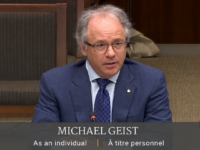
Make It Make Sense: My Appearance Before the Standing Committee on Public Safety and National Security on Bill C-22’s Lawful Access Plan
Fresh off appearing before a Senate committee on AI on Wednesday, yesterday I provided expert testimony to the Standing Committee on Public Safety and National Security as part of its study on Bill C-22, the government’s latest lawful access plan. Appearing alongside David Fraser and Robert Diab (the same trio that discussed the bill on my Law Bytes podcast), I opened my remarks by noting that technologies change, the governments may change, but the challenge with lawful access has always been the same: to give law enforcement and security agencies the tools they need to address serious crime while respecting Canadians’ privacy rights and the constitutional framework the Supreme Court has built around privacy in decisions such as Spencer and Bykovets. I focused on three major concerns with the bill, including mandatory metadata retention, the inadequacy of the systemic vulnerability safeguards, and the lowering of the production order threshold for subscriber information. My full opening statement is embedded below.

Wilful Blindness?: How the Lawful Access Charter Statement Skips Bill C-22’s Most Constitutionally Vulnerable Provisions
The committee hearings on Bill C-22, the lawful access bill, kick off later today with an appearance by Justice Minister Sean Fraser and Public Safety Minister Gary Anandasangaree, who will presumably use the opportunity to affirm their support for the bill and reject concerns that certain elements are inconsistent with the Charter of Rights and Freedoms. That position reflects the government’s Charter statement on the bill, which was released late last month. The statement walks through the Charter implications of new provisions such as the confirmation of service demand, yet what makes it particularly notable is that it avoids addressing some of the bill’s biggest concerns altogether with scant or no attention paid to mandated metadata collection and the risks associated with systemic vulnerabilities. Indeed, it is as if the government believes that if it ignores the potential violation of fundamental rights, the issue magically disappears.

Lawful Access Heads to Committee: The Opposition Found Its Voice, the Government Never Found Its Defence
After several days of debate in which the opposition to lawful access seemed half-hearted at best, the Conservatives woke up on Monday. MP after MP rose to argue, correctly, that Bill C-22 represents an unprecedented surveillance threat: mandated metadata retention (including location information) for up to a year, security vulnerabilities built into the interception architecture the bill requires, and a weakened legal standard for access to subscriber information. After days of debate with the government visibly struggling to defend its own legislation, this is precisely what the opposition should be targeting (coverage from day one, day two, day three).

Recent Posts
 “Position Has Not Changed”: The Canadian Government Reaffirms That Antisemitism Includes Anti-Zionism
  The Law Bytes Podcast, Episode 279: My Keynote on Digital Sovereignty: Control, Choice, and Connection
  The What, Me Worry? Consultation: Media Quietly Tells Government It Wants Even More Funding With Little Concern for Independence Risks
  Years of Uncertainty: Bill C-22’s Missing Regulations and Secret Ministerial Orders
  The Missing Charter Statement: Why Hasn’t the Government Explained How Bill C-34’s Social Media Ban Complies with the Charter?
