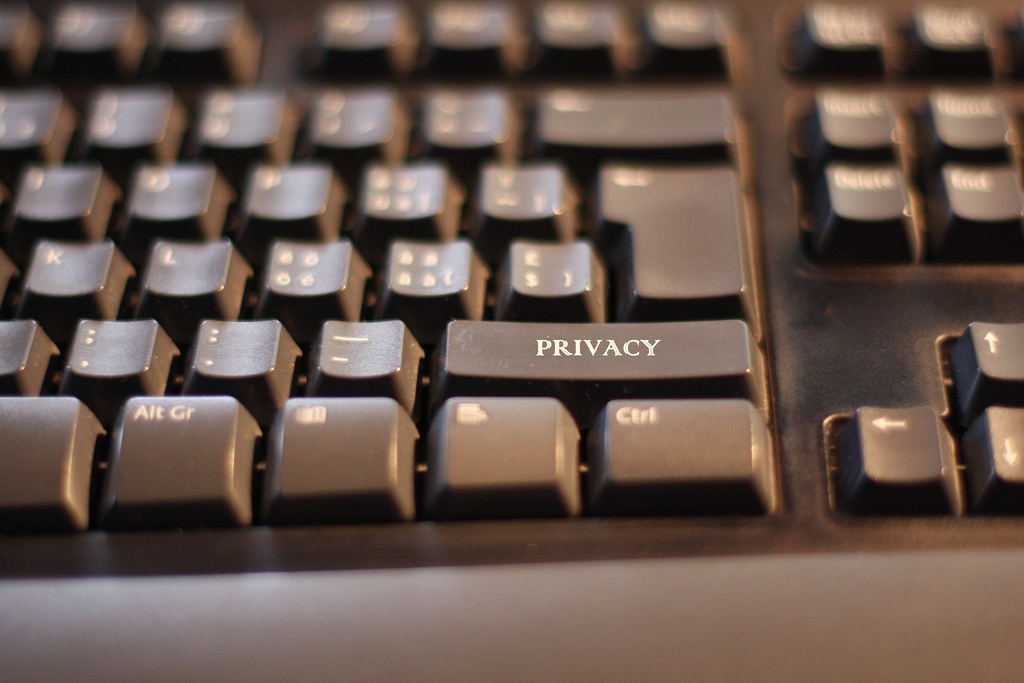

Wiertz Sebastien - Privacy by Sebastien Wiertz (CC BY 2.0) https://flic.kr/p/ahk6nh

Wiertz Sebastien - Privacy by Sebastien Wiertz (CC BY 2.0) https://flic.kr/p/ahk6nh

Privacy

What a great read by @stephen_wolfram@twitter.com 😎 “What is ChatGPT doing
 and why does it work?” by David Roessli  CC BY-NC-SA 2.0 https://flic.kr/p/2oEJVLM

The Law Bytes Podcast, Episode 259: The Privacy and Surveillance Risks of AI Chatbot Reporting to Police

Over the past ten days, Canada has witnessed one of the fastest-moving technology policy debates in recent memory. What began as reporting about a tragic act of violence – the shootings in Tumbler Ridge, BC –  quickly evolved into questions about AI safety, corporate responsibility, police reporting obligations, and now potential AI regulation.

This week’s Law Bytes podcast is a bit different from the norm. Building off my Globe and Mail op-ed, I walk through what has happened thus far, examine the potential policy responses, and explain why both the Online Harms Act and current AI legislative models are poorly suited to this problem, and argue that Canada instead needs to start thinking seriously instead about an AI Transparency Act.

Read more ›

March 2, 2026 2 comments Podcasts
SenateCA tweet, https://x.com/SenateCA/status/2027197059397275879

Nobody Wants This: Senate Rejects Government’s Anti-Privacy Plan for Political Parties By Sending Bill Back to the House With a Sunset Clause

Faced with a bill that would leave political parties subject to weaker privacy rules than virtually any other major organization in Canada, the Senate voted yesterday to amend the bill by including a sunset clause on the privacy provisions that gives that the government three years to come up with something better. The change is designed to allow the new rules, which as the Senate heard repeatedly from experts and privacy commissioners are not real privacy rules at all, to apply immediately but expire in three years. This will have the effect of killing a B.C. privacy challenge that sparked the legislation in the first place. The bill heads back to the House of Commons, where the government can either accept the change and have the bill pass or reject the change and send it back again to the Senate. If it is sent back, the Senate is unlikely to oppose the privacy elements in the bill again.

Read more ›

February 27, 2026 3 comments News
Privacy Please by ricky montalvo (CC BY-ND 2.0) https://flic.kr/p/8RF3Ez

Time for the Government to Fix Its Political Party Privacy Blunder: Kill Bill C-4’s Disastrous Privacy Rules

Just weeks after last year’s election, Mark Carney’s government committed not one, but two privacy blunders in rapid succession. First, Bill C-2 – literally the first substantive bill of the new government – buried lawful access provisions in an omnibus “border measures” bill that would have established unprecedented warrantless access to the personal of information of Canadians. Second, days later it introduced Bill C-4, which was framed as affordability measures bill but included provisions that exempt political parties from the application of privacy protections. The bizarre assault on privacy felt like an opportunistic attempt to insert unpopular rules in the hope that few were paying attention. The strategy was failure: the government ultimately introduced a new border measures bill with lawful access removed (new lawful access rules are expected in their own bill this year) and now a Senate committee which studied the Bill C-4 privacy rules has recommended that they be killed, removed from the bill, or subject to a two-year sunset clause.

Read more ›

February 18, 2026 6 comments News
Instagram and TikTok logos displayed on a laptop by Cure Media https://flic.kr/p/2mdTmeZ CC BY 2.0

Court Ordered Social Media Site Blocking Coming to Canada?: Trojan Horse Online Harms Bill Clears Senate Committee Review

Critics of Senator Julie Miville-DechĂȘne’s successive bills that ostensibly target pornography sites have for years warned of the privacy and equity risks that arise from mandated age verification and the dangers of over broad legislation that would extend far beyond pornography sites by covering social media, search, and AI services. The Senate committee reviewing the latest iteration of those bill – Bill S-209 – met yesterday to conduct a clause-by-clause review of the bill. That the bill passed through committee pending some supplementary remarks was not a surprise. However, that the privacy and equity concerns barely merited a mention and that regulating social media sites was viewed as feature not a bug was a wake up call.

Read more ›

February 6, 2026 9 comments News
CeBIT_2011_Samstag_PD_118 by Bin im Garten, CC BY-SA 3.0 , via Wikimedia Commons

Government Says There Are No Plans for National Digital ID To Access Services

The government has confirmed that it has no plans to create a national identification system. The issue arose in a sessional paper response released this week to a question from Conservative MP Marilyn Gladu. Gladu asked “With regard to the government’s implementation of a digital identification that will be mandatory to access government services and pay taxes: what is the plan and progress of the government on the implementation of a digital identification and what are the implementation dates for each phase?” The government’s short answer: “the Government of Canada is not implementing a federal or national digital identification credential.”

Read more ›

January 29, 2026 1 comment News