
Surveillance: America's Pastime by Jared Rodriguez / t r u t h o u t; Adapted: naixn, Jason Smith / feastoffun.com) (CC BY-NC-SA 2.0)
Surveillance

The Law Bytes Podcast, Episode 263: The Lawful Access Act Roundtable With David Fraser and Robert Diab
Lawful access is back. The decades-long battle has entered a new phase with the introduction of Bill C-22, the Lawful Access Act. This bill follows last spring’s attempt to bury lawful access provisions in Bill C-2, a border measures bill. The latest bill covers the two main aspects of lawful access: law enforcement access to personal information held by communication service providers such as ISPs and wireless providers, and the development of surveillance and monitoring capabilities within Canadian networks.
To discuss the latest iteration of lawful access, I’m joined on the Law Bytes podcast by David Fraser and Robert Diab for a roundtable discussion of the key elements of the proposed legislation. David is one of Canada’s leading privacy lawyers and a partner with McInness Cooper in Halifax, and Robert is a law professor at Thompson Rivers University in BC and the co-author of a book on search and seizure law.

The Lawful Access Privacy Risks: Unpacking Bill C-22’s Expansive Metadata Retention Requirements
Much of the discussion around the new lawful access bill (Bill C-22) has focused on provisions that improved upon Bill C-2, notably the decision to scrap the warrantless information demand power by requiring judicial oversight for access to subscriber information. Yet despite that improvement, there remain serious privacy concerns with the government’s latest iteration of lawful access. Buried in the second half of Bill C-22 is a provision granting the government the power to require “core providers” to retain categories of metadata, including transmission data, for up to one year. This is mandatory metadata retention that would require telecom and electronic service providers to store information about the communications of all their users, regardless of whether those users are suspected of anything. It is one of the most privacy invasive tools a government can deploy and the international experience suggests that there are major privacy risks.
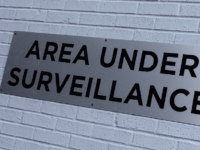
A Tale of Two Bills: Lawful Access Returns With Changes to Warrantless Access But Dangerous Backdoor Surveillance Risks Remain
The decades-long battle over lawful access entered a new phase yesterday with the introduction of Bill C-22, the Lawful Access Act. This bill follows the attempt last spring to bury lawful access provisions in Bill C-2, a border measures bill that was the new government’s first piece of substantive legislation. The lawful access elements of the bill faced an immediate backlash given the inclusion of unprecedented rules permitting widespread warrantless access to personal information. Those rules were on very shaky constitutional ground and the government ultimately decided to hit the reset button on lawful access by proceeding with the border measures in a different bill.
Lawful access never dies, however. Bill C-22 cover the two main aspects of lawful access: law enforcement access to personal information held by communication service providers such as ISPs and wireless providers and the development of surveillance and monitoring capabilities within Canadian networks. In fact, the bill is separated into two with the first half dealing with “timely access to data and information” and the second establishing the Supporting Authorized Access to Information Act (SAAIA).

The Law Bytes Podcast, Episode 259: The Privacy and Surveillance Risks of AI Chatbot Reporting to Police
Over the past ten days, Canada has witnessed one of the fastest-moving technology policy debates in recent memory. What began as reporting about a tragic act of violence – the shootings in Tumbler Ridge, BC – quickly evolved into questions about AI safety, corporate responsibility, police reporting obligations, and now potential AI regulation.
This week’s Law Bytes podcast is a bit different from the norm. Building off my Globe and Mail op-ed, I walk through what has happened thus far, examine the potential policy responses, and explain why both the Online Harms Act and current AI legislative models are poorly suited to this problem, and argue that Canada instead needs to start thinking seriously instead about an AI Transparency Act.

Why The Recent TikTok Privacy Ruling Swaps Privacy for Increased Surveillance
Last month, federal privacy commissioner Philippe Dufresne, alongside his provincial privacy counterparts from Quebec, Alberta, and British Columbia, released the results of a multi-year investigation into TikTok’s privacy practices. As my Hub opinion piece notes, the outcome was never really in doubt—look under the hood of any social media company and you will find some privacy concerns—but what was both surprising and risky was the commissioner’s demand that TikTok engage in increased surveillance of its users in the name of better privacy practices.

Recent Posts
 Why the Verdict on Social Media Defective Design Harming Children Gets the Instinct Right But the Law Wrong
  Scoping in the Tech Giants: Bill C-22’s International Production Order and the Shift to a Less Privacy-Protective Cross-Border Disclosure System
  The Law Bytes Podcast, Episode 263: The Lawful Access Act Roundtable With David Fraser and Robert Diab
  When Writing About Antisemitism Proves the Point: What the Replies Reveal
  Acting on Antisemitism: If This Was Always Possible, Why Didn’t It Happen Sooner?
