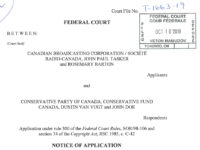
As the 2019 federal election winds toward voting day next week, copyright has unexpectedly arrived on the scene. Cultural groups have lamented for weeks that none of the national political parties have discussed copyright, placed it in their platforms, or otherwise committed to reforms. The likely reason – neatly articulated by OpenMedia’s Laura Tribe in this week’s Lawbytes podcast – is that there are no sharp divisions between the parties on copyright that might provide an electoral advantage. Instead, the government conducted an extensive copyright review which led to the Industry Committee’s June 2019 report. That committee, which heard from hundreds of witnesses representing all perspectives, generated a report that received all-party support and provides a roadmap for future reforms (the notable exception being on crown copyright).
Archive for October 17th, 2019

Recent Posts
 The Missing Charter Statement: Why Hasn’t the Government Explained How Bill C-34’s Social Media Ban Complies with the Charter?
  Three Years After October 7th: Living With the Shockwaves
  What If the U.S. Demanded This? The Cloud Provider Conditions Behind Canada’s EU Digital Pivot
  Ontario is Done Waiting for Universities to Act on Campus Antisemitism
  Is Compromise on Encryption Possible? Why Bill C-22’s “Minor Opening” Leaves the Central Question Unanswered
