I’ve written extensively about Bill C-4 and the government’s effort to bury political party privacy rules that largely eliminate privacy obligations for federal political parties and apply the new rules retroactively to May 2000. This past week’s Law Bytes podcast featured Senate hearings on the bill, which ultimately resulted in an amendment to require the government to establish actual privacy obligations within three years. The government yesterday rejected the amendment and the bill received royal assent in a lightning-fast process.
It began with the House rejecting a Senate amendment to the bill.
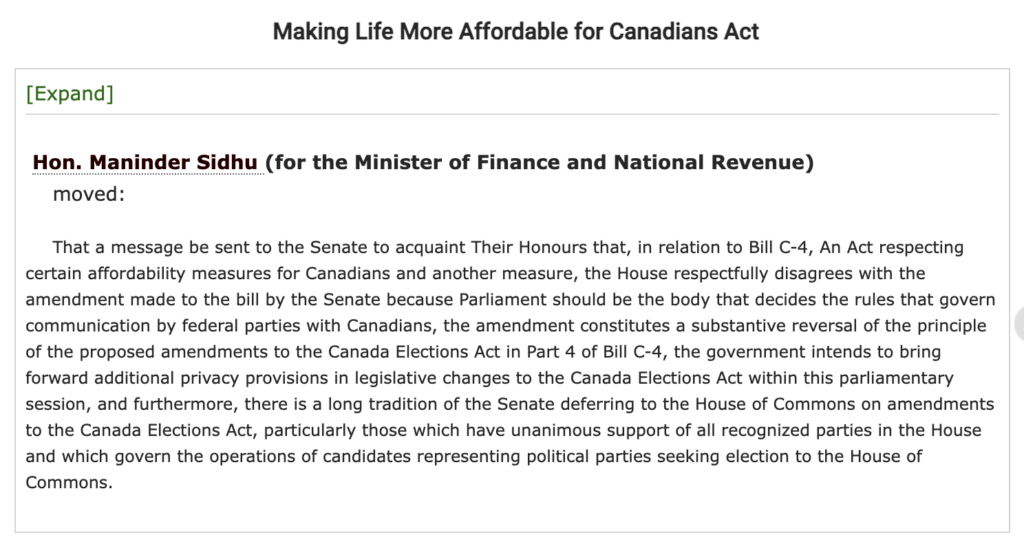
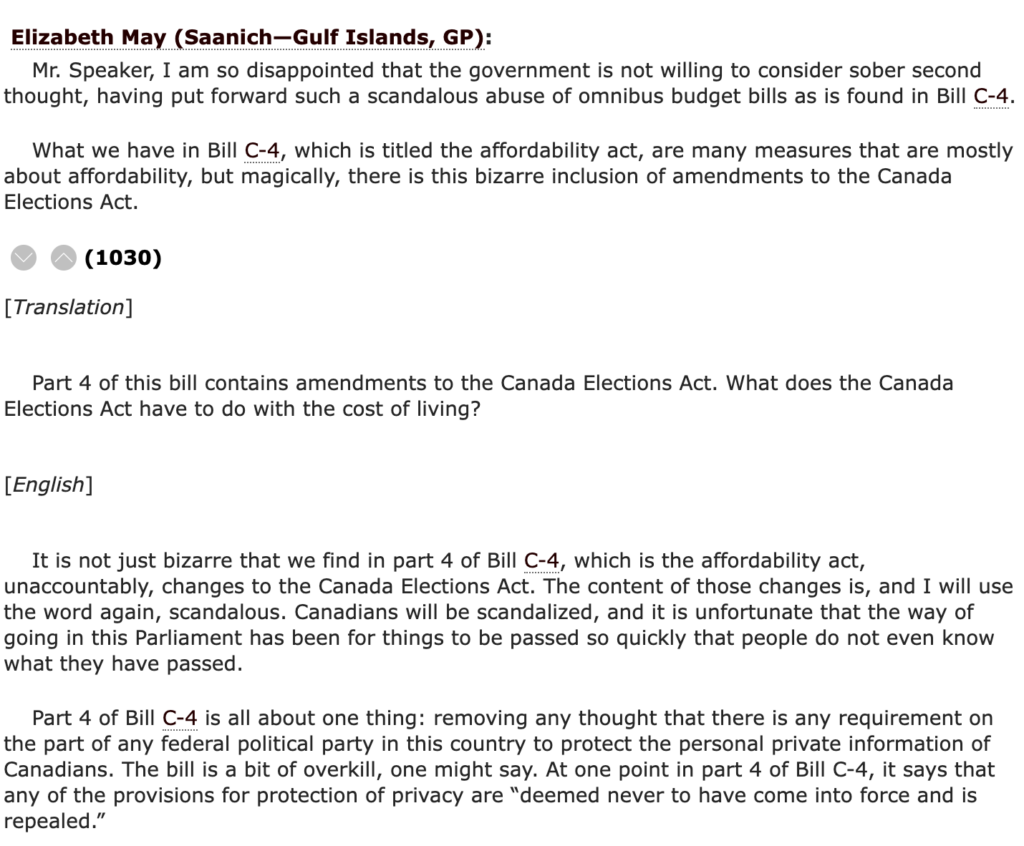
Only one MP – Elizabeth May – spoke to the motion. No other MP had anything to say.
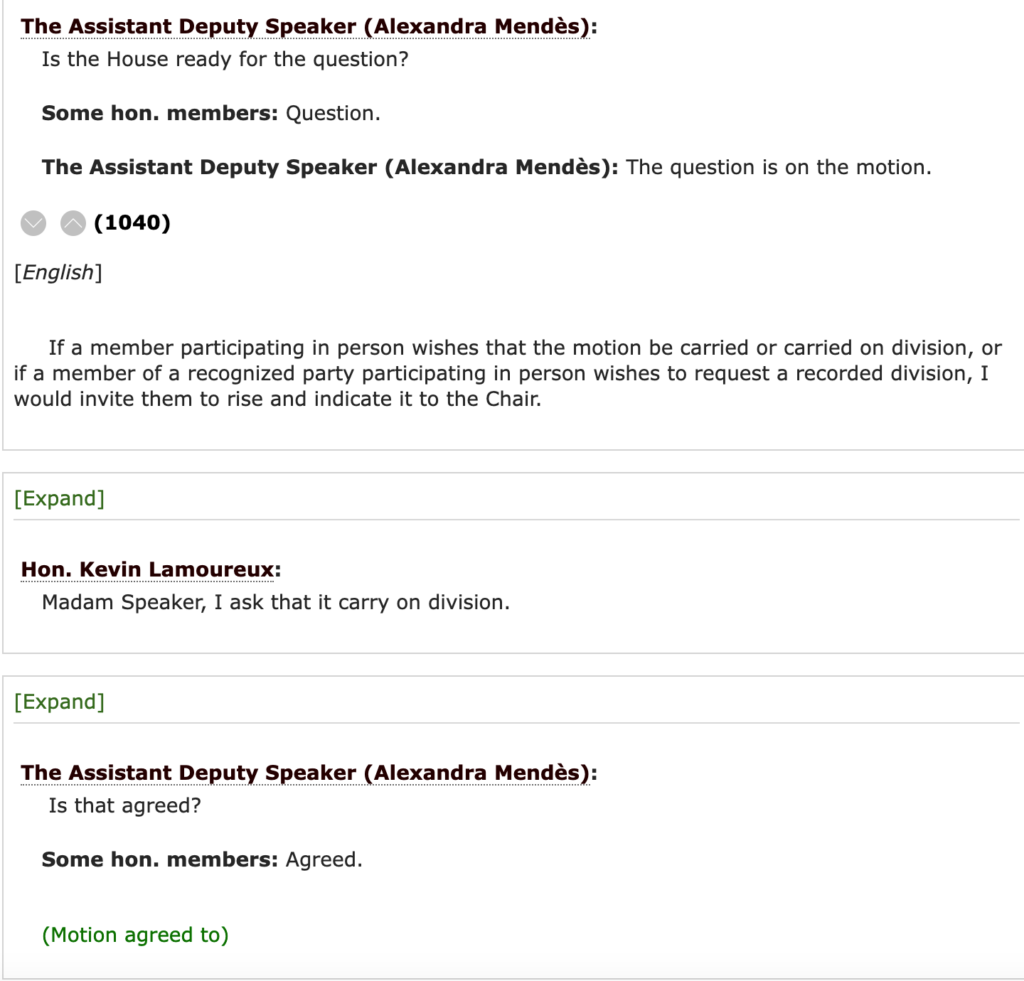
Given the silence, the motion moved immediately to a vote. No need for an actual vote though. Just an agreement to “carry on division.” The motion rejecting the Senate amendment that merely required the government to establish real privacy rules within three years was passed.
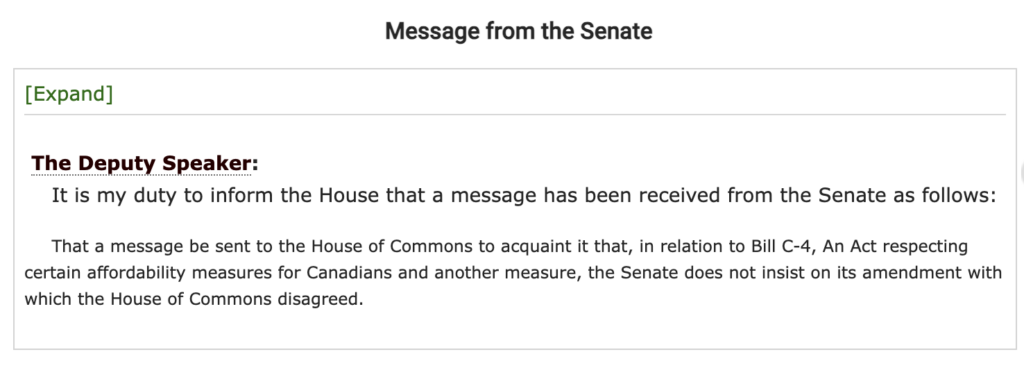
With the House rejection, the matter went immediately to the Senate. It quickly agreed to withdraw its amendment to Bill C-4.

And so the House was quickly informed that the amendment was withdrawn.
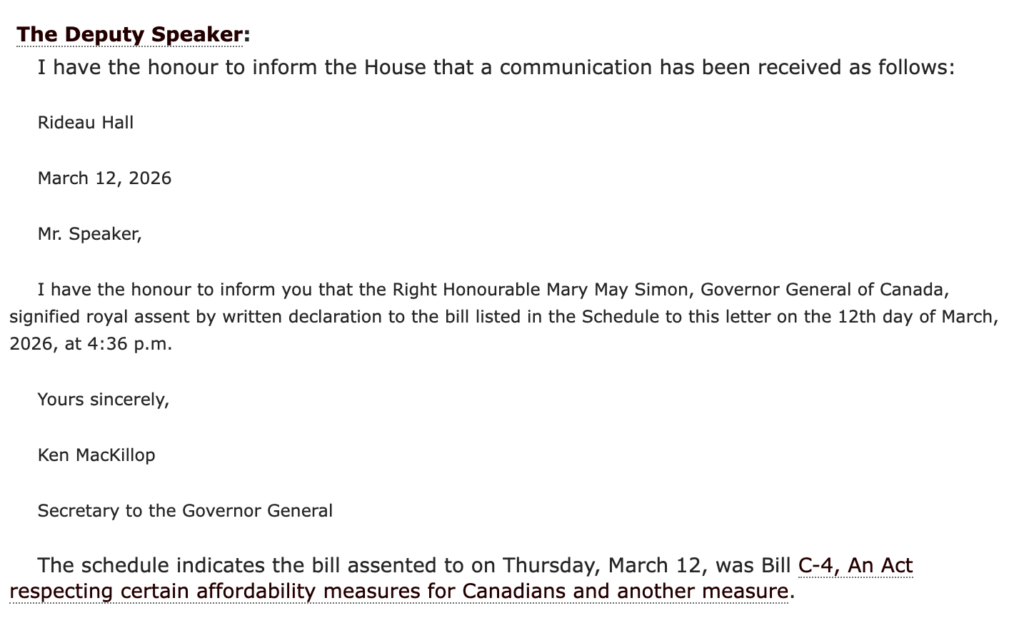
Within minutes, Bill C-4 received royal assent. Bill passes without privacy safeguards and without any real discussion or debate. All within a matter of hours.
Related posts:
 Government Remains Silent as it Eviscerates Political Party Privacy in Canada By Fast Tracking Bill C-4
 Government Seeks To Exempt Political Parties From Privacy Laws Even As CRTC Reports They Are Leading Source of Spam Complaints
 Time for the Government to Fix Its Political Party Privacy Blunder: Kill Bill C-4’s Disastrous Privacy Rules
 Nobody Wants This: Senate Rejects Government’s Anti-Privacy Plan for Political Parties By Sending Bill Back to the House With a Sunset Clause







Thanks for laying this appalling sequence of events out, Michael. And now on to the Court of Appeal and the decision about the applicability of BC PIPA to the FPPs.
What does all this mumbo jumbo on Bill C4 mean in language that a plumber or chamber maid can understand.
The Government wants to know everything about and things about you you don’t even know.
This is deeply troubling from a transparency and accountability standpoint. The fact that the government pushed this through with such urgency, rejecting a Senate amendment that would have actually established meaningful privacy obligations within a reasonable timeframe, sends a worrying signal about their priorities.
What stands out to me most is the retroactive application to May 2000. That effectively shields nearly 25 years of potential privacy practices from any new rules, which seems designed more to protect past behavior than to actually protect Canadians’ privacy rights.
The fact that only Elizabeth May bothered to speak to the motion in the House is also quite telling about how little attention this significant piece of legislation received. Many Canadians probably don’t even realize that federal political parties operate with minimal privacy oversight compared to private businesses and other public institutions.
The three-year timeline for establishing actual obligations is concerning too – it essentially means we’re in a privacy vacuum for parties for the foreseeable future, with no real guidance or enforcement in sight.
This feels like a missed opportunity to bring political party data practices in line with what ordinary Canadians expect and deserve. Rather than closing a gap, this legislation appears to be codifying the status quo of insufficient protection.