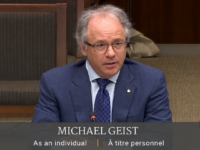
Fresh off appearing before a Senate committee on AI on Wednesday, yesterday I provided expert testimony to the Standing Committee on Public Safety and National Security as part of its study on Bill C-22, the government’s latest lawful access plan. Appearing alongside David Fraser and Robert Diab (the same trio that discussed the bill on my Law Bytes podcast), I opened my remarks by noting that technologies change, the governments may change, but the challenge with lawful access has always been the same: to give law enforcement and security agencies the tools they need to address serious crime while respecting Canadians’ privacy rights and the constitutional framework the Supreme Court has built around privacy in decisions such as Spencer and Bykovets. I focused on three major concerns with the bill, including mandatory metadata retention, the inadequacy of the systemic vulnerability safeguards, and the lowering of the production order threshold for subscriber information. My full opening statement is embedded below.
Latest Posts
Why Social Media and AI Chatbot Bans for Kids Are Bad Policy: Making the Case at the Senate Social Affairs, Science and Tech Committee
The Standing Senate Committee on Social Affairs, Science and Technology is one of several committees in the House and Senate conducting hearings on artificial intelligence. I appeared before the committee yesterday (my fourth appearance on the issue in recent months), but rather than reiterate previous testimony on privacy, copyright, and transparency, I focused on the big issue of the moment: bans on social media and AI chatbots for children. The committee had been hearing from many supportive witnesses who emphasized the risk of harm associated with AI. Indeed, one Senator asked the panel before mine to raise their hands if they supported a ban, and virtually all hands went up. I was unsure about how my comments would be received, but I found the Senators open to debate on the issue. A video of my opening remarks, together with the transcript, is posted below. A future Law Bytes podcast episode will delve into the discussion that followed.
Government Has a Choice: Why an AI Chatbot Ban for Kids is an Even Worse Idea Than a Social Media Ban
The frenzy to ban kids from social media continues to grow with Culture Minister Marc Miller telling a House of Commons committee that the government has no choice but to act. Miller’s comments are consistent with the federal Liberal policy convention vote backing a minimum age of 16 and Manitoba Premier Wab Kinew announcing that his government will be the first in Canada to ban kids from both social media and AI chatbots. The problem, as I documented in detail last week, is that good intentions do not make for good policy. In this case, a social media ban is bad policy because it does not address the underlying problems with the platforms, evidence to date suggests it doesn’t work, and it creates its own harms. But the bad policy does not end there, as the possibility of extending that same framework to AI chatbots is now squarely on the table. This post examines the implications of a ban on kids’ use of AI chatbots, arguing that such an approach is even worse than a social media ban. To be clear, regulation of AI chatbots is needed, but a ban leaves the genuine concerns associated with AI chatbots largely untouched.

Wilful Blindness?: How the Lawful Access Charter Statement Skips Bill C-22’s Most Constitutionally Vulnerable Provisions
The committee hearings on Bill C-22, the lawful access bill, kick off later today with an appearance by Justice Minister Sean Fraser and Public Safety Minister Gary Anandasangaree, who will presumably use the opportunity to affirm their support for the bill and reject concerns that certain elements are inconsistent with the Charter of Rights and Freedoms. That position reflects the government’s Charter statement on the bill, which was released late last month. The statement walks through the Charter implications of new provisions such as the confirmation of service demand, yet what makes it particularly notable is that it avoids addressing some of the bill’s biggest concerns altogether with scant or no attention paid to mandated metadata collection and the risks associated with systemic vulnerabilities. Indeed, it is as if the government believes that if it ignores the potential violation of fundamental rights, the issue magically disappears.

The Law Bytes Podcast, Episode 267: Peter Nowak on Rogers, the Shaw Merger Aftermath, and the Limits of Canadian Telecom Policy
The recent announcement that Rogers is offering buyouts to half of its workforce is just the tip of the iceberg in a series of developments involving one of Canada’s dominant communications companies. It has seen rising consumer complaints, is cutting capital expenditures, increasingly pivoting towards sports and media, and is now looking to cut its workforce dramatically. Three years after the Rogers-Shaw merger, is this simply the predicted outcome of allowing that merger to go through?
To help assess what is happening, Peter Nowak, a veteran telecom journalist, joins the Law Bytes podcast. Peter has covered the industry, worked in the industry and now publishes “Do Not Pass Go”, a regular newsletter and a podcast focused on competition, monopoly, and corporate concentration in Canada.

Recent Posts
 How Much Further Will Lawful Access Go?: Police Chief Tells Bill C-22 Hearing That Three Years of Metadata Retention Would Be “Ideal”
  Bill C-22’s Groundhog Day: Why the Government’s Dismissal of Signal, Apple and the U.S. Congress Concerns Runs Back the Disastrous Online News Act Playbook
  Slick Videos Won’t Save Lawful Access: Why The Government’s Bill C-22 Defence Avoids the Charter, Privacy and Security Concerns Raised By Critics
  The Law Bytes Podcast, Episode 268: Sara Grimes on the Moral Panic Behind Banning Kids from Social Media and AI Chatbots
  U.S. Congressional Leaders Warn Canadian Lawful Access Plans Harm U.S. National Security and Economic Interests
