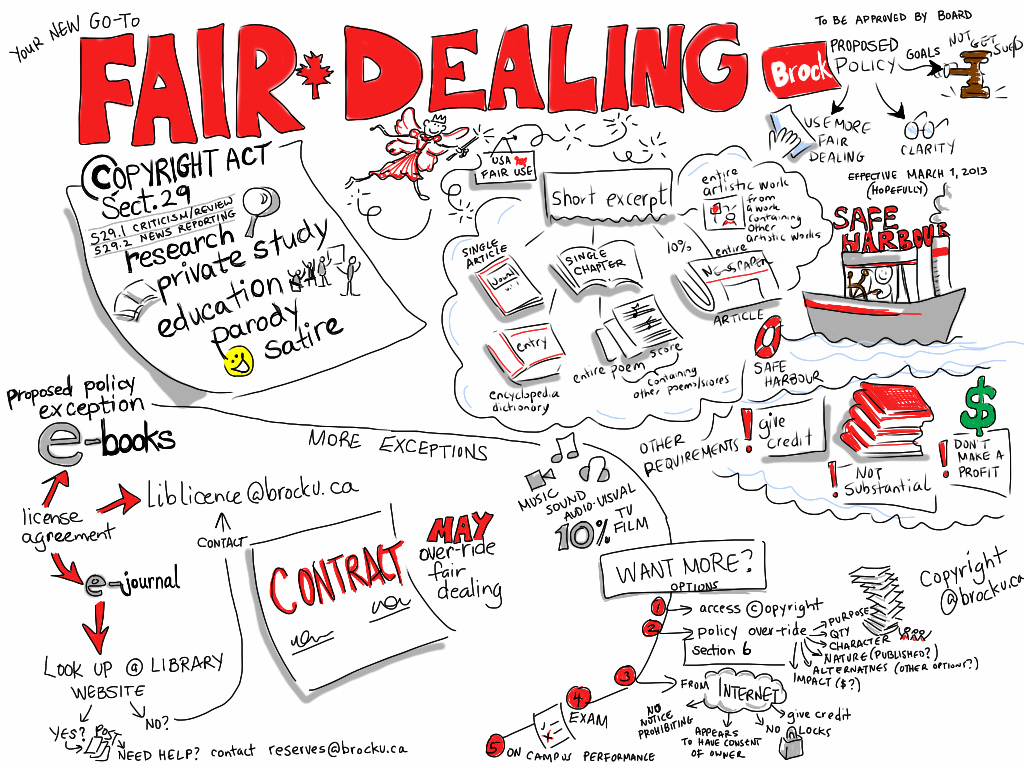

Fair Dealing by Giulia Forsythe (CC BY-NC-SA 2.0) https://flic.kr/p/dRkXwP

Fair Dealing by Giulia Forsythe (CC BY-NC-SA 2.0) https://flic.kr/p/dRkXwP

Copyright

Vice President Biden Swears in Bruce Heyman as the U.S. Ambassador to Canada by Department of State (U.S. Government Work) https://flic.kr/p/muidu1

Why U.S. Pressure Is Behind the Stalled Canadian Anti-Counterfeiting Bill

Last year, the federal government trumpeted anti-counterfeiting legislation as a key priority. The bill raced through the legislative process in the winter and following some minor modifications after committee hearings, seemed set to pass through the House of Commons. Yet after committee approval, the bill suddenly stalled with little movement throughout the spring.

Why did a legislative priority with all-party approval seemingly grind to a halt?

My weekly technology law column (Toronto Star version, homepage version) suggests that the answer appears to stem from the appointment of Bruce Heyman as the new U.S. ambassador to Canada. During his appointment process, Heyman identified intellectual property issues as a top priority and as part of his first major speech as ambassador, singled out perceived shortcomings in the anti-counterfeiting bill.

Read more ›

September 2, 2014 7 comments Columns
europe infinite copyright by Jose Mesa (CC BY 2.0) https://flic.kr/p/amMHBV

How Canada Shaped the Copyright Rules in the EU Trade Deal

In late December 2009, Wikileaks, the website that publishes secret government information, posted a copy of the draft intellectual property chapter of the Canada – European Trade Agreement (CETA). The CETA deal was still years from completion, but the leaked document revealed that the European Union envisioned using the agreement to mandate a massive overhaul of Canadian law.

The leak generated concern among many copyright watchers, but when a German television station leaked the final text of the agreement last week, it contained rules that largely reflect a “made-in-Canada” approach. Why the near-complete reversal in approach on one of the most contentious aspects of a 500 page treaty?

My weekly technology law column (Toronto Star version, homepage version) notes the starting point for copyright in CETA as reflected in 2009 leaked document was typical of European demands in its trade agreements. It wanted Canada to extend the term of copyright to life of the author plus 70 years (Canada is currently at the international standard of life plus 50 years), adopt tough new rules for Internet provider liability, create criminal sanctions for some copyright infringement, implement new rights for broadcasters and visual artists, introduce strict digital lock rules with minimal exceptions, and beef up enforcement powers. In other words, it was looking for Canada to mirror its approach on copyright.

Read more ›

August 21, 2014 7 comments Columns
Pay to the order of... by Scott J. Waldron (CC BY 2.0) https://flic.kr/p/FtDtt

The Battle Over Tariff 8, Part 2: The Recording Industry’s Surprising Opposition to Songwriter, Composer and Music Publisher Streaming Royalties

Yesterday I posted on the battle over Tariff 8, the Copyright Board of Canada’s new tariff for digital music streaming services that the media has suggested could open the door to popular foreign services migrating to Canada. Despite the initial excitement, the Canadian recording industry, led by Music Canada (formerly the Canadian Recording Industry Association) has taken aim at the decision, which its President Graham Henderson argues:

will further imperil artists’ livelihoods, and threatens to rob them of the fruits of their labour in the new digital marketplace. And it will further undermine the business environment, undercutting the ability of labels and other music companies to make future investments in Canadian talent.

As noted in the post, Re:Sound, the collective responsible for the tariff, has filed for judicial review of the decision and Music Canada is urging its supporters to “like” its Facebook protest page, which it says will help win the fight.

There are two things that make the campaign against the decision particularly striking: the industry’s failure to mention to that Tariff 8 is only one of several payments made for music streaming and its opposition to those other payments.

Read more ›

July 30, 2014 1 comment News
The Battle Over Tariff 8: What the Recording Industry Isn’t Saying About Canada’s Internet Streaming Royalties

The Battle Over Tariff 8: What the Recording Industry Isn’t Saying About Canada’s Internet Streaming Royalties

Over the past month, Music Canada, the lead lobby group for the Canadian recording industry, has launched a social media campaign criticizing a recent Copyright Board of Canada decision that set some of the fees for Internet music streaming companies such as Pandora. The long-overdue decision seemingly paves the way for new online music services to enter the Canadian market, yet the industry is furious about rates it claims are among the worst in the world.

The Federal Court of Appeal will review the decision, but the industry has managed to get many musicians and music labels worked up over rates it labels 10 percent of nothing. While the Copyright Board has more than its fair share of faults, a closer examination of the Internet music streaming decision suggests that this is not one of them.

The Music Canada claim, which is supported by Re:Sound (the copyright collective that was seeking a tariff or fee for music streaming), is that the Canadian rates are only 10 percent of the equivalent rate in the United States. That has led to suggestions that decision devalues music and imperils artists’ livelihood.

My weekly technology law column (Toronto Star version, homepage version) argues the reality is far more complex.

Read more ›

July 29, 2014 6 comments Columns
IMG00329-20100401-1251 by William Marriage (CC BY 2.0) https://flic.kr/p/7Q2uT3

UK ISPs and Rights Holders Agree on Voluntary Notice-and-Notice Style Copyright System

Several years ago, the United Kingdom passed the controversial Digital Economy Act, which included provisions for disconnecting Internet users accused of repeat copyright infringement. That bill generated protests, but ultimately passed. The disconnection provisions never took effect, however, as they were the target of legal challenges. Now reports indicate that the copyright enforcement scheme has been shelved altogether as rights holders and Internet service providers have reached agreement on a voluntary system that looks a lot like Canada’s notice-and-notice approach.

The system involves a maximum of four warning letters to a customer per year.  There is no disclosure of the subscriber information and no threat of loss of Internet service. Rights holders can take further legal action if they so choose. I wrote about Canada’s notice-and-notice system here (which similarly involves notices, no disclosure of personal information, and no loss of service), discussing its effectiveness and warning against the possibility that the Trans Pacific Partnership could be used to override the “made in Canada” approach.

Read more ›

July 25, 2014 Comments are Disabled News