
Telecom by yum9me (CC BY-NC-ND 2.0) https://flic.kr/p/53jSy4

Telecom by yum9me (CC BY-NC-ND 2.0) https://flic.kr/p/53jSy4

Telecom

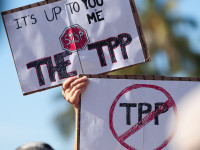
07290126 by SumofUs (CC BY 2.0) https://flic.kr/p/vKwD5e

The TPP Copyright Chapter Leaks: Canada May Face Website Blocking, New Criminal Provisions & Term Extension

KEI this morning released the May 2015 draft of the copyright provisions in the Trans Pacific Partnership (copyright, ISP annex, enforcement). The leak appears to be the same version that was covered by the EFF and other media outlets earlier this summer. As such, the concerns remain the same: anti-circumvention rules that extend beyond the WIPO Internet treaties, additional criminal rules, the extension of copyright term, increased border measures, mandatory statutory damages, and expanding ISP liability rules, including the prospect of website blocking for Canada.

Beyond the substantive concerns highlighted below, there are two key takeaways. First, the amount of disagreement within the chapter is striking. As of just a few months ago, there were still many critical unresolved issues with widespread opposition to (predominantly) U.S. proposals. Government ministers may continue to claim that the TPP is nearly done, but the parties still have not resolved longstanding copyright issues.

Second, from a Canadian perspective, the TPP could require a significant overhaul of current Canadian law. If Canada caves on copyright, changes would include extending the term of copyright, implementing new criminal provisions, creating new restrictions on Internet retransmission, and adding the prospect of website blocking for Internet providers. There is also the possibility of further border measures requirements just months after Bill C-8 (the anti-counterfeiting bill) received royal assent.


Read more ›

August 5, 2015 22 comments News
Police telephone by Marcin Wichary (CC BY 2.0) https://flic.kr/p/4nidee

Why the New Canadian Telecom Transparency Rules Fall Short

Canadians have become increasingly troubled by reports revealing that telecom and Internet companies receive millions of requests for subscriber data from a wide range of government departments. In light of public concern, some Internet and telecom companies have begun to issue regular transparency reports that feature aggregate data on the number of requests they receive and the disclosures they make.

The transparency reports from companies such as Rogers, Telus, and TekSavvy have helped shed light on government demands for information and on corporate disclosure practices. However, they also paint an incomplete picture since companies have offered up inconsistent data and some of the largest, including Bell, have thus far refused to come clean on past requests and disclosures.

Read more ›

July 7, 2015 10 comments Columns
Gambling Man by Adrian Sampson (CC BY 2.0) https://flic.kr/p/2yjQp

Quebec’s Website Blocking Plan Gambles With the Open Internet

For governments accustomed to wielding their power to regulate local activity, the Internet has long been a source of frustration. From music sites to Uber to AirBNB, online services represent an enormous challenge to conventional government regulation, which typically relies on a jurisdictional hook to compel compliance.

While most reputable global companies can ill-afford to simply ignore laws or court orders, there are still websites that operate largely beyond the reach of government regulation. In response, some governments have attempted to regulate online behaviour, ordering Internet providers to block access to offending websites.

My weekly technology law column (Toronto Star version, homepage version) notes that Canadians have generally been spared website blocking initiatives due in part to the Telecommunications Act, which prohibits carriers from controlling “the content or influence the meaning or purpose of telecommunications carried by it for the public.” That rule means that Internet providers are effectively prohibited from unilaterally blocking content.

Read more ›

June 30, 2015 10 comments Columns
MTV logos 1981-82 by Fred Seibert (CC BY-NC-ND 2.0) https://flic.kr/p/aCbLyG

Getting OMNI’d: Why Many Canadian TV Channels May Be Headed for the Chopping Block

Rogers Media’s recent decision to slash 110 jobs and end all newscasts at OMNI, its multicultural channel, has sparked outrage among many ethnic communities, who have lamented the cancellation of local news programs in Italian, Punjabi, Cantonese, and Mandarin. Supporters argue that OMNI programming is essential to those communities and worry that the cancellations will mean that viewers become less politically engaged.

Last week, a House of Commons committee held a hearing on the OMNI cuts as members of Parliament from each party took Rogers executives to task. Rogers was unsurprisingly unapologetic, noting that the decision was based on simple economics as it pointed to declining advertising revenues that made the programming unsustainable.

Read more ›

June 25, 2015 12 comments Columns
Twin Peaks, Plate 2 by Thomas Hawk (CC BY-NC 2.0) https://flic.kr/p/61x4pj

Netflix vs. CraveTV: More Than 90% of CraveTV Titles Are Not Available On Netflix U.S. or Canada

Bell’s recent characterization of Canadians using virtual private networks to access U.S. Netflix as thieves has attracted considerable attention. Yesterday, I posted on why accessing U.S. Netflix is not theft, noting that a minority of Canadian Netflix subscribers use VPNs and arguing that the frustration seems rooted in business concerns rather than legal ones. The post added that Netflix and CraveTV (Bell’s online video service) have little overlap in content. Working with Kavi Sivasothy, one of my research students, we took a closer look at the libraries of Netflix U.S., Netflix Canada, and CraveTV. We relied on AllFlicks.net for the Netflix data and CraveTV’s own A to Z page for its data.

Based on that information, how many titles does CraveTV offer that overlap with Netflix U.S. and are not available on Netflix Canada? Not many. In fact, the data suggests that there are some CraveTV titles that are not available on Netflix U.S., but are available on Netflix Canada. Overall, more than 90 percent of CraveTV’s titles are not available on either Netflix U.S. or Netflix Canada. [UPDATE: Thanks to a reader for pointing out a few omissions from the chart. The error was due to different spelling in the Netflix and CraveTV lists. The numbers have been updated].

Read more ›

June 9, 2015 32 comments News