
The government’s consultation on AI transparency closed yesterday. My submission builds on appearances before the House of Commons Industry committee, the Senate Transport and Communications committee, and the Senate Social Affairs committee, and recommends an AI Transparency Act built on three pillars: mandatory public disclosure of AI corporate safety and escalation policies, an issue I raised in the aftermath of Tumbler Ridge, transparency on the works included in AI training data, and annual transparency reports on government and law enforcement demands for user data. It addresses each of the discussion paper’s five areas, including why Bill C-36 (the government’s privacy reform bill) is unlikely to facilitate better transparency in automated decision-making before at least 2030 and why Bill C-34’s synthetic content labelling obligation does not fully address the issue of identifying such content that can mislead. The full submission is posted below.
Blog

Not If, But When: The Yom Kippur Terror Attack in Belleville
I came out of Yom Kippur services on Monday evening to the news of a terror attack on Sunday night at the Sons of Jacob synagogue in Belleville, Ontario. Reports indicate that the shooter drove up in a truck and fired on a police officer stationed outside the synagogue, leading to several minutes of gunfire. The officer was shot and is now in hospital. By sheer luck, the congregation was ten minutes late starting their service, meaning that the gunfire that left roughly 20 holes in the sanctuary window missed its intended target.
The good fortune that a massacre was averted does not lessen the impact of gunfire targeting a synagogue packed with congregants on the holiest day of the year. Shootings and firebombings at Canadian synagogues have become commonplace over the past three years. When I said in March that many in the community had come to view a Bondi Beach-style attack in Canada as a question of not if, but when, the comment garnered surprise, yet six months later it has happened, with a police officer averting a disastrous loss of life.
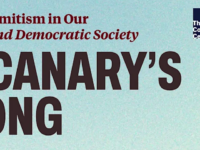
A Canary’s Song: What Antisemitism Reveals About the Health of Canadian Democracy
Peter Biro’s A Canary’s Song: Antisemitism in Our “Free and Democratic Society” conference was held earlier this week at the University of Toronto Conference Centre as the University stepped up after Massey College demanded that it vet the conference Biro had proposed, organized, and committed to fund. Biro resigned his senior fellowship rather than accept the demands, which led to national media coverage and well-deserved criticism of the college. I was honoured to participate in the exceptional event alongside an incredible lineup of experts in a packed, sold-out room.

Elbows Up With Europe Too: Why Canada’s Pivot to the EU Raises the Same Digital Sovereignty Questions as the U.S.
Canada’s pivot to Europe continues to accelerate with Prime Minister Mark Carney’s speech to the European Parliament today, the call for Canada to become the first “associate member” of the EU, negotiations on a Canada-EU Digital Trade Agreement launched earlier this year that could conclude this fall, and an upcoming summit that could bring even further measures. In the wake of the collapse of trade talks between Canada and the U.S., closer relations with the EU are an obvious alternative. While U.S. demands on digital policy (notably the cancellation of the DST and streaming payments) have attracted some criticism in Canada, a European shift is likely to substitute one pressure point for another, with some of the same questions about Canadian digital sovereignty in play. Indeed, the EU has exported its regulatory standards around the world for decades, and trading U.S. “digital trade alignment” for a European digital regulatory model will still raise many of the same “elbows up” questions about whether Canada gets to set its own digital policies.
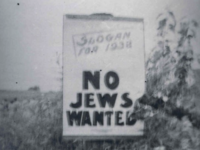
A Century After Keeping Jewish Students Out, Universities Are Letting Them Be Pushed Out
In 1926, McGill University’s dean of arts, Ira MacKay, urged the university to establish a quota on the admission of Jewish students, writing that “the Jewish people are of no use to us in this country” and that “as a race of men their traditions and practices do not fit in with a high civilization in a very new country.” McGill proceeded to increase admission requirements for Jewish applicants and informally establish quotas for students applying to medicine and law, restrictions that would last for years and be mirrored in other institutions such as the University of Manitoba.
My The Hub op-ed notes the ugliness of naked antisemitism once felt like ancient history in Canada, but as students are heading back to class, new studies and reports have confirmed that a century after open quotas and discrimination, the Jewish experience on campus is once again under threat.

Recent Posts
 Years of Uncertainty: Bill C-22’s Missing Regulations and Secret Ministerial Orders
  The Missing Charter Statement: Why Hasn’t the Government Explained How Bill C-34’s Social Media Ban Complies with the Charter?
  Three Years After October 7th: Living With the Shockwaves
  What If the U.S. Demanded This? The Cloud Provider Conditions Behind Canada’s EU Digital Pivot
  Ontario is Done Waiting for Universities to Act on Campus Antisemitism
