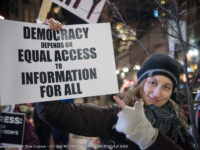
As the concern over U.S. net neutrality rules heats up, last week I appeared before the House of Commons Standing Committee on Access to Information, Privacy and Ethics to provide committee members with an hour-long briefing on the issue. The audio of the appearance can be found here. My opening remarks, which emphasized the Canadian net neutrality framework, the potential impact of U.S. policies, and the implications for privacy and freedom of expression, are posted in full below.
Committees
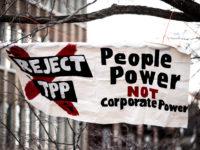
The TPP is Back: My Submission on the Canadian Government’s TPP11 Consultation
The Trans Pacific Partnership, once left for dead after U.S. President Donald Trump withdrew from the agreement, is back with negotiations on a TPP11 (the original agreement featured 12 countries) set to resume next week. With reports indicating that dozens of provisions may be suspended, the Canadian government just concluded a public consultation on the issue. My full submission is posted below. It expresses concern with the lack of TPP transparency and provides comments on five substantive areas: dispute settlement, copyright, patents, e-commerce/digital trade, and culture.

The Government’s Role in E-commerce: My Appearance Before the Standing Committee on International Trade
On the same day that I wrote about the overwhelming volume of hearings, notices, and consultations on digital policy, I also appeared before the House of Commons Standing Committee on International Trade to discuss the role of government policy in fostering the growth of e-commerce. The panel included eBay Canada’s Andrea Stairs (who argued for an increase in the de minimis threshold for consumer imports) and Peter Simons, the CEO of the Simons department store chain (who argued for no de minimis and the application of sales taxes on all purchases regardless of the size or location of the seller). My opening remarks centered on five areas for government action on e-commerce: access to affordable broadband, fostering consumer trust, intermediary liability, intellectual property, and e-commerce in trade agreements.
![By Office of the President of the United States (@realDonaldTrump on Twitter) [Public domain], via Wikimedia Commons https://commons.wikimedia.org/wiki/File%3ADonald_Trump_Justin_Trudeau_2017-02-13_03.jpg](https://www.michaelgeist.ca/wp-content/uploads/2017/10/Donald_Trump_Justin_Trudeau_2017-02-13_03-200x150.jpg)
NAFTA Modernization and IP/E-commerce: My Appearance at the Senate Open Caucus
I appeared earlier this week before the Senate Open Caucus to discuss the IP and e-commerce implications of the NAFTA renegotiation. The panel, which included Jerry Dias, Al Mussel, and Brenda Swick, featured an engaging discussion with senators from across the political spectrum. My opening remarks emphasized three points from a Canadian perspective: meeting international standards, doing no harm, and seeking a level playing field. The comments are posted below.

The Case for CASL: My Appearance Before the Standing Committee on Industry, Science and Technology
The Standing Committee on Industry, Science and Technology is conducting a review of CASL, Canada’s anti-spam law. While the usual critics are out in full force, I had the opportunity to appear before the committee yesterday to explain why there is real harm, why CASL has helped solve the problem, and why claims that the law is overbroad are overstated. Of particular note was the discussion involving the significant decline in the number of major spamming organizations operating in Canada since the law took effect. Three years ago, Spamhaus’ Register of Known Spamming Organizations listed Canada as home to 7 of the top 100 spamming organizations worldwide (who are responsible for 80% of global spam). Canada’s presence on the ROKSO list has been dramatically reduced with only two Canadian-based organizations remaining on the list, suggesting that spam originating in Canada has experienced a significant decline. My full opening remarks are posted below.

Recent Posts
 “Position Has Not Changed”: The Canadian Government Reaffirms That Antisemitism Includes Anti-Zionism
  The Law Bytes Podcast, Episode 279: My Keynote on Digital Sovereignty: Control, Choice, and Connection
  The What, Me Worry? Consultation: Media Quietly Tells Government It Wants Even More Funding With Little Concern for Independence Risks
  Years of Uncertainty: Bill C-22’s Missing Regulations and Secret Ministerial Orders
  The Missing Charter Statement: Why Hasn’t the Government Explained How Bill C-34’s Social Media Ban Complies with the Charter?
